
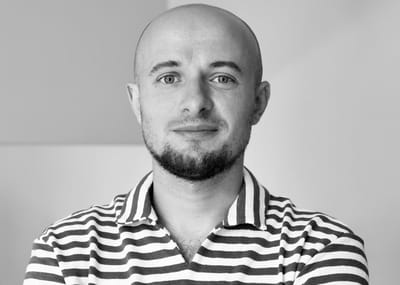
Georgii Kalandiia
Works with adult patients, combining evidence-based psychiatry with modern psychotherapy approaches
Services
Psychiatric appointment, 60 minutes
Online psychiatric appointment, 60 minutes
Psychiatric follow‑up, 30 minutes
Online Psychiatric follow‑up, 30 minutes
Biography
I work with adult patients as a psychiatrist and psychotherapist.
In my psychiatric practice, I focus on the diagnosis of mental health disorders, differential diagnosis, selection and adjustment of medication treatment, and assessment of its effectiveness and tolerability.
In psychotherapy, it is important to me not only to alleviate a person’s current condition, but also to understand together which psychological and behavioural mechanisms contribute to maintaining their difficulties. I take into account the clinical picture, the patient’s personality, life experience, current circumstances, relationships with others, and habitual ways of coping with emotional experiences.
I follow a collaborative approach. Together with the patient, we discuss the results of the assessment, possible treatment options, expected effects and limitations. Decisions are made based on clinical indications, the person’s needs, values, and readiness for change.
My work is grounded in the principles of evidence-based medicine. The main approaches in my psychotherapy practice are cognitive behavioural therapy (CBT) and schema therapy. I also use selected methods from acceptance and commitment therapy (ACT) when they are appropriate for the specific case.
## Conditions I work with as a psychiatrist
– Depressive disorders
– Bipolar disorder and other mood disorders
– Generalized anxiety disorder
– Panic disorder and panic attacks
– Social anxiety disorder
– Obsessive-compulsive disorder
– Stress- and trauma-related disorders, including PTSD and complex PTSD
– Attention-deficit/hyperactivity disorder (ADHD) in adults
– Personality disorders
– Psychotic disorders, including schizophrenia-spectrum disorders and schizoaffective disorder
– Conditions requiring differential diagnosis between anxiety, mood, personality, psychotic, and neurodevelopmental disorders
– Selection, adjustment, and monitoring of the effectiveness and tolerability of psychopharmacological treatment
## Conditions and concerns I work with in psychotherapy
– Depressive disorders
– Generalized anxiety disorder
– Panic disorder
– Social anxiety disorder
– Obsessive-compulsive disorder
– Adjustment disorder
– PTSD and complex PTSD
– Personality disorders and persistent personality-related difficulties
– Recurring emotional, behavioural, and interpersonal patterns that persist despite understanding their consequences
– Life crises, difficulties with self-definition, and the need to reconsider habitual ways of relating to oneself and others
Within schema therapy, I work with personality disorders and persistent life patterns, including repeated painful relationship patterns, pronounced self-criticism and shame, suppression of one’s own needs, difficulties with trust, intimacy and personal boundaries, as well as habitual ways of protecting oneself from painful experiences — avoiding them, adapting to others at one’s own expense, trying to maintain rigid control, or hiding vulnerability behind assertiveness, achievements, emotional detachment, and devaluation.
## How I understand psychotherapy
I view psychotherapy as a collaborative process in which it is important not only to alleviate the current condition, but also to understand how life experience, relationships with others, and learned ways of coping with emotional experiences have shaped and continue to maintain existing difficulties.
Understanding a problem is often not enough. When clinically appropriate and consistent with the patient’s goals and readiness, therapy involves gradual behavioural change and gaining new experiences. Such changes should be meaningful, sufficiently safe, and manageable, while also going beyond habitual avoidance.
For me, acceptance does not mean giving up. It means being able to see reality and remain in contact with one’s experiences without allowing them to completely determine one’s actions.
The goal of therapy is not to eliminate every difficult thought or feeling, but to increase a person’s freedom to act in accordance with their values and needs.
Sustainable change is more often built not through one decisive effort, but through small, consistently repeated steps. The role of a psychotherapist is not to impose a ready-made idea of the “right” life, but to help a person better understand their own patterns, expand their available ways of responding, and make freer choices.
Education
– 2020 — Bashkir State Medical University, General Medicine
– 2023 — Residency in Psychiatry, N. N. Burdenko Voronezh State Medical University
– 2023 — Professional retraining in Psychotherapy, B. D. Karvasarsky Institute of Psychotherapy and Medical Psychology, Saint Petersburg
Experience
Experience in psychiatry — more than four years; in psychotherapy — five years.
Worked in a public outpatient psychiatric service and private medical organizations. Experienced in conducting initial psychiatric and differential diagnosis, long-term patient follow-up, medication selection and adjustment, as well as individual psychotherapy.
– 2026 — present — Psychiatrist, Psychotherapist, A CLINIC, Tbilisi
Certificates
– 2023–2024 — “The Art of Psychopharmacological Treatment of Mental Disorders,” continuing professional education program, Medical and Psychological Center “Reshenie,” Saint Petersburg
– 2024 — “The Art of Diagnosing Mental Disorders,” continuing professional education program, Medical and Psychological Center “Reshenie,” Saint Petersburg
– 2025 — Basic Schema Therapy Course, Moscow Institute of Schema Therapy
– Long-term Cognitive Behavioral Therapy training program under the supervision of Yakov Kochetkov — first year completed
– Regularly attend schema therapy supervision and continue professional development in psychiatry, psychopharmacology, and modern psychotherapy approaches