


It is commonly believed that depression is a disease of modern times, but this is a profound misconception. As Samuel Beckett once observed, “the amount of tears in the world is always constant.” Merciless despair and the absence of life force are states as ancient as cave people — if not as ancient as the caves themselves. And indeed, the perspectives of people from past eras on depression sound strikingly similar to our own.
Let us take a brief journey through time and see how the understanding of this illness — one that today is successfully treated by psychiatrists, psychotherapists, and psychologists — has evolved.
From Black Bile to Healing Through Words
Even the great Hippocrates argued that depression was a disease of the brain requiring medical intervention. He believed the cause was an excess of a special fluid called “black bile.” The Greek words for black bile were “melaina chole,” from which the word “melancholy” originates. He described people of his time as experiencing “sadness, moral despair, a tendency toward dark thoughts, aversion to food, despondency, insomnia, irritability, and anxiety.” The physician often blamed the autumn season for increasing the amount of “melaina chole.”
Interestingly, Hippocrates intuitively touched upon methods resembling modern psychotherapy. Observing a king who was literally “wasting away before his eyes,” he noticed the ruler changed expression whenever he saw his father’s former concubine. By helping the king recognize his true feelings and convincing him to marry the woman he loved, Hippocrates completely cured him, discovering the psychosomatic nature of illness.
Of course, history also contained exotic theories. For example, the ancient Greek physician Philagrius advised treating melancholy with a mixture of honey, ginger, and pepper, believing the illness resulted from excessive loss of semen. Philosophers Socrates and Plato even considered the disorder a privilege of thinkers.
The Sin of Despair and the Mystery of the Soul
With the rise of Christianity, life came to be viewed as the highest gift, while despair began to be interpreted as a sin and a devaluation of that gift. Saint Augustine, who likely experienced a depressive episode himself, wrote that he had become “a great mystery” to himself, unable to understand the reasons for his own sadness. Fortunately, the modern Church distinguishes between clinical depression (an illness requiring treatment) and a spiritual crisis (a need for repentance).
Centuries passed. In the 17th century, the English language acquired the term “depression,” but the inner world of the suffering person remained a mystery. English scholar Robert Burton remarked that understanding the heart of a melancholic person was harder than encountering a boundless sea suspended in the air. Meanwhile, 18th-century physician John Monro considered the illness irreversible and insisted on harsh treatment of patients.
Voices from the Past
The illness spared neither ordinary people nor the greatest minds, whose diaries and letters are filled with pain. If we analyze their writings, we can recognize classic features of severe depression.
The 18th-century Scottish writer James Boswell left a piercing testimony of his struggle with probable depression. In one letter to a friend, he openly described his condition: “Expect to find nothing in this letter except the sufferings of your poor friend. I have been in the harshest and most tormenting melancholy. I was utterly crushed. My mind was filled with the blackest thoughts, all powers of reason abandoned me…”
The 18th-century English poet William Cowper suffered from severe depressive episodes. In a letter to a relative, he sadly described his state: “I shall try not to answer you only in notes of sorrow and despair, though all the strings of joy within me seem broken. I possess a certain frightening inner self, yet I can find no use for it…”
In the 17th century, Samuel Johnson — the famous English writer who likely suffered from depression — wrote: “I hope to resist constantly and be ready for work at any time, although I have been abandoned by almost everyone who once helped me…”
In the 19th century, Abraham Lincoln, the 16th President of the United States, experienced several well-documented depressive episodes. He wrote to a friend: “I am now the most miserable man living. If what I feel were equally distributed to the whole human family, there would not be one cheerful face on earth. Whether I shall ever be better, I cannot tell; I awfully forebode I shall not. To remain as I am is impossible…”
And finally, as we conclude our short journey into the past, let us look once more at the 19th century. Depression spared neither great geniuses nor those whose lives appeared perfect from the outside. Leo Tolstoy captured this feeling of inner emptiness amid external success with astonishing precision: “My life came to a standstill… I did not know how to live, what to do; I was lost and fell into despair… And this happened to me at a time when from every side I possessed what is considered perfect happiness.”
What Do We Know About Depression Today?
In many ways, modern medicine echoes Hippocrates: depression is a complex biopsychosocial syndrome involving a combination of factors and requiring professional intervention. The scale of the problem is enormous — today, around 332 million people suffer from depression worldwide. According to WHO forecasts, by 2030 depression will surpass cardiovascular diseases and become the leading cause of disability and mortality.
If we simplify the essence of depression, it looks approximately like this:
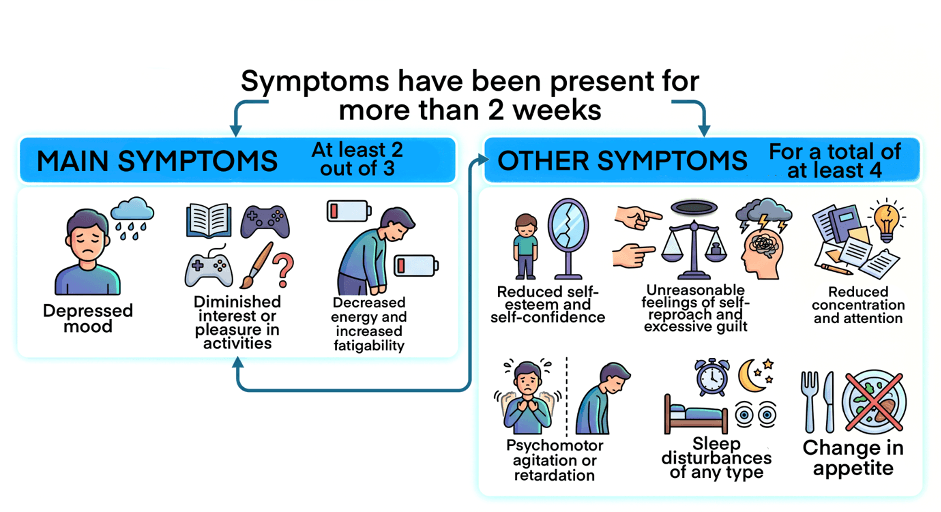
Looking at our list of great thinkers from the past, it may seem surprising, but women are more prone to depression than men. However, the predominance of male quotations reflects the patriarchal structure of past eras, when public life and literary voice belonged mostly to men, while women’s experiences were documented far less often.
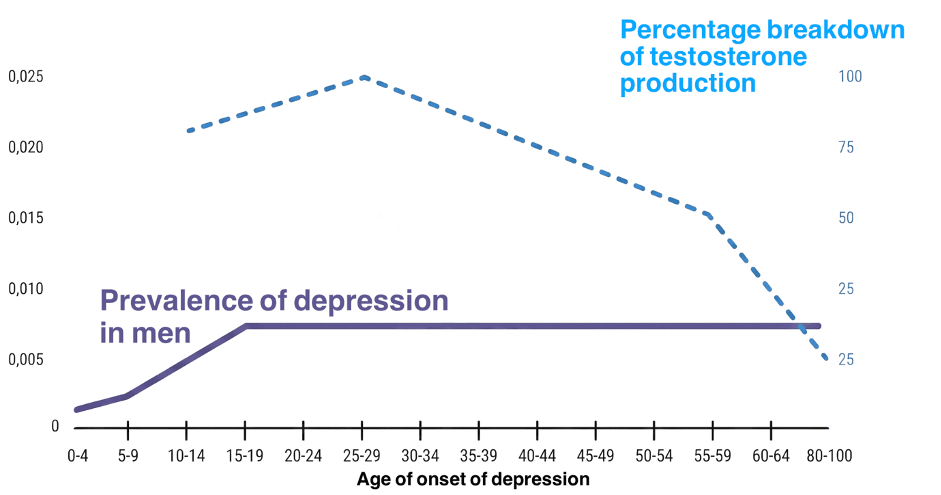
In men, the frequency of depression increases during puberty and then remains relatively constant throughout life, despite the gradual decline in testosterone levels beginning around age 25.
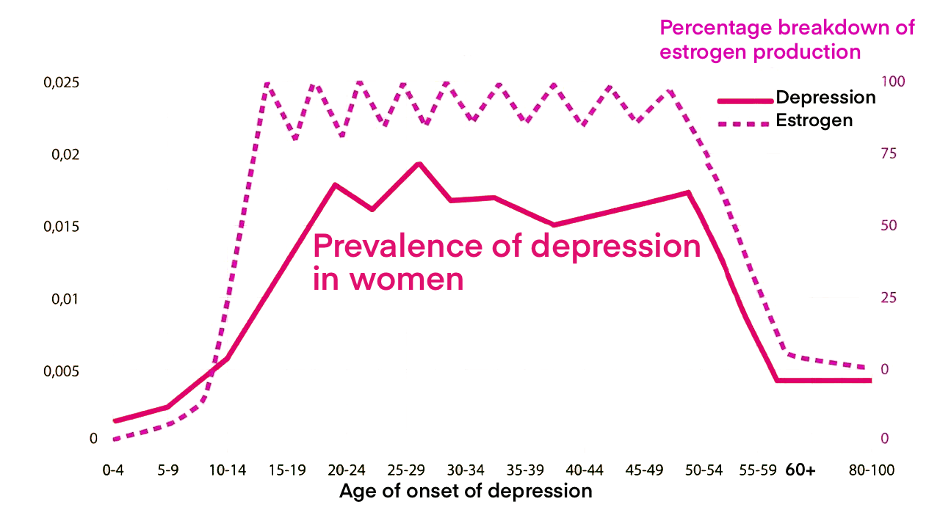
In women, during reproductive years — when estrogen levels are high and fluctuate cyclically — depression occurs 2–3 times more often than in men. As estrogen concentrations rise during puberty, the frequency of depression also increases, while during menopause it tends to decline.
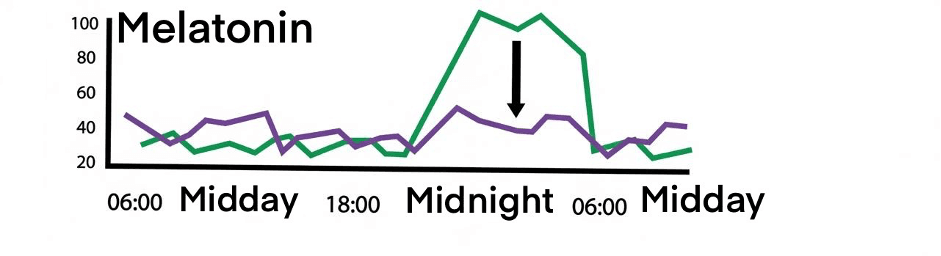
In both men and women, depression (among other conditions) is strongly associated with sleep disturbances, particularly desynchronization of circadian rhythms. Depression leads to delayed phases in the daily sleep–wake cycle.
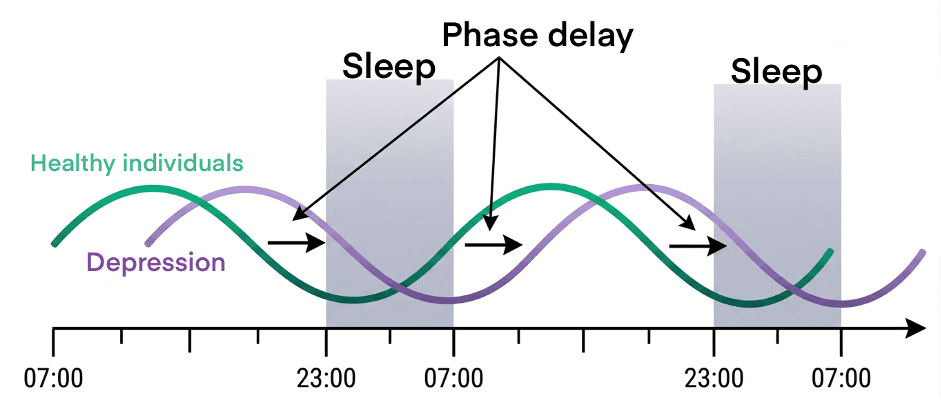
Because wakefulness in the morning does not occur properly, such individuals often go to bed later. They experience difficulty falling asleep at night, which further increases daytime sleepiness. The phase delay observed in depression may be related to impaired melatonin production in the brain, even in darkness.

You Do Not Have to Face This Alone
Depression can happen to anyone. Triggers may include stress, violence, or profound loss — but sometimes it appears without any obvious reason, regardless of gender, age, or social status.
What truly distinguishes our era from antiquity is that you no longer have to remain alone with this illness. Modern psychiatry offers evidence-based psychotherapy and effective medications that a physician can carefully tailor to restore balance in your body.
What can you do for yourself right now?
– Try to continue activities that once brought you pleasure
– Stay connected with friends and family
– Maintain regular physical activity, even short walks
– Follow a consistent eating and sleep schedule whenever possible
– Avoid alcohol or reduce its consumption, and do not use illicit substances, as they may worsen depression
– Talk about your feelings with people you trust
– Seek help from a medical professional
Remember: you are not alone. Millions of people before you — and millions right now — have experienced similar feelings. Some of them were able to receive help. Take a step toward your health — modern medicine knows how to help restore joy to life.